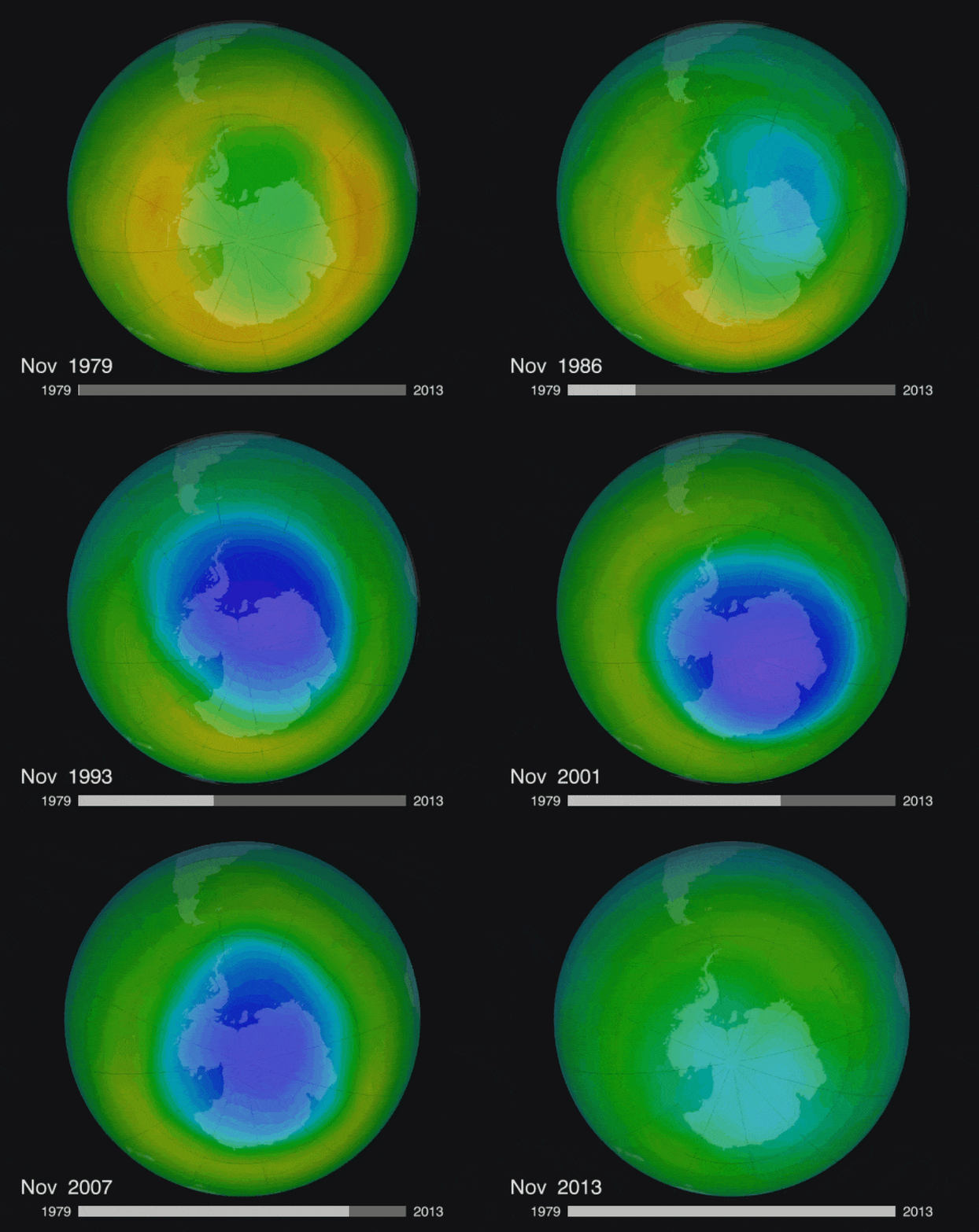
“Ozone” is mentioned 33 times in the document. The second mentioning is stating that “The possibility that the UVB component of solar radiation will increase as a result of depletion of the ozone layer is a matter of concern. This question was not addressed in the present volume.” Then it goes on to mention “ozone” 31 more times, four of them in connection with “depletion”.
Note: The sudden increase in detected skin-cancers in some of the research papers cited in Mono 55, blamed the rise on depletion of the Ozone layer, especially over Australia. This “theory” coincided with the global warming hysteria at that time but has since then been discharged as a fraud because of that the naturally fluctuating “Ozone hole” over Antarctica didn’t reach closer than 2000 km from the most southern part of Tasmania.
The most significant method to judge the potential danger of any substance, or, in this case, radiation, ought to be to look at its long term influence. This method was used in Mono 55 mainly by including research on “total lifetime sun exposure” and “occupational exposure”.
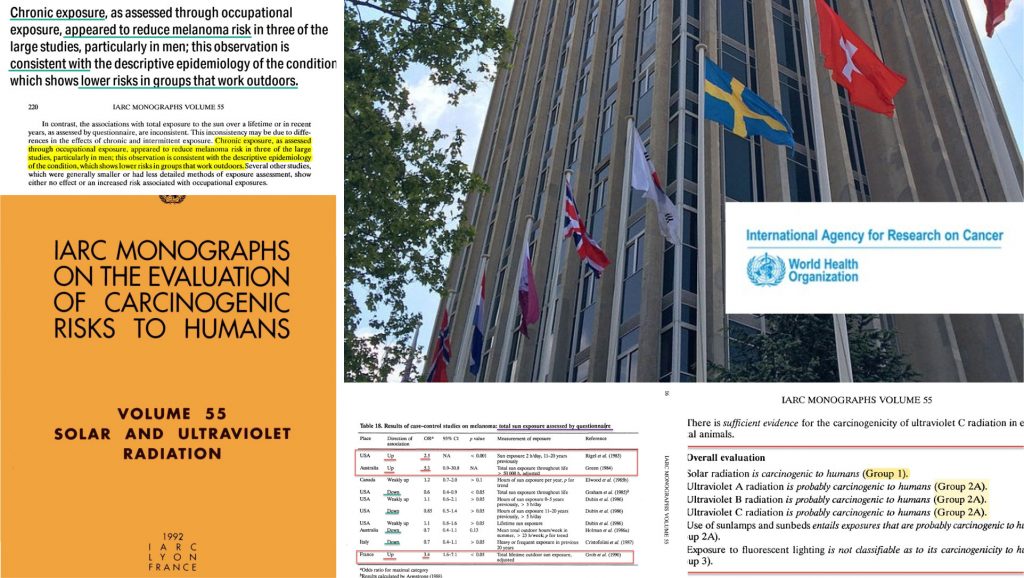
The assessment of “total [lifetime] sun exposure” (p.116) gave the conclusion:
“The results of studies in which total sun exposure was assessed using questionnaires, either over lifetime or at different periods of life, have been mixed (Table 18). Positive associations were seen by Green (1984) in Queensland, Australia; no consistent overall association was seen in western Canada, and in Western Australia the association was negative. The results of the other studies are similarly mixed.”
There are ten studies listed in Table18. Three of them show “up” (i.e. an increase in melanoma with increased total exposure to sunlight). Two of those were made by researchers associated with L’Oréal (Riegel) and L’Oréal Recherché (Green) and the third by a researcher (Grob) from a clinic close to IARC, actively promoting sunscreen chemicals.
Three other studies showing “weakly up” (1.1-1.2, practically insignificant) and four studies with strong (0.6-0.85) negative association between total lifetime sun exposure and melanoma.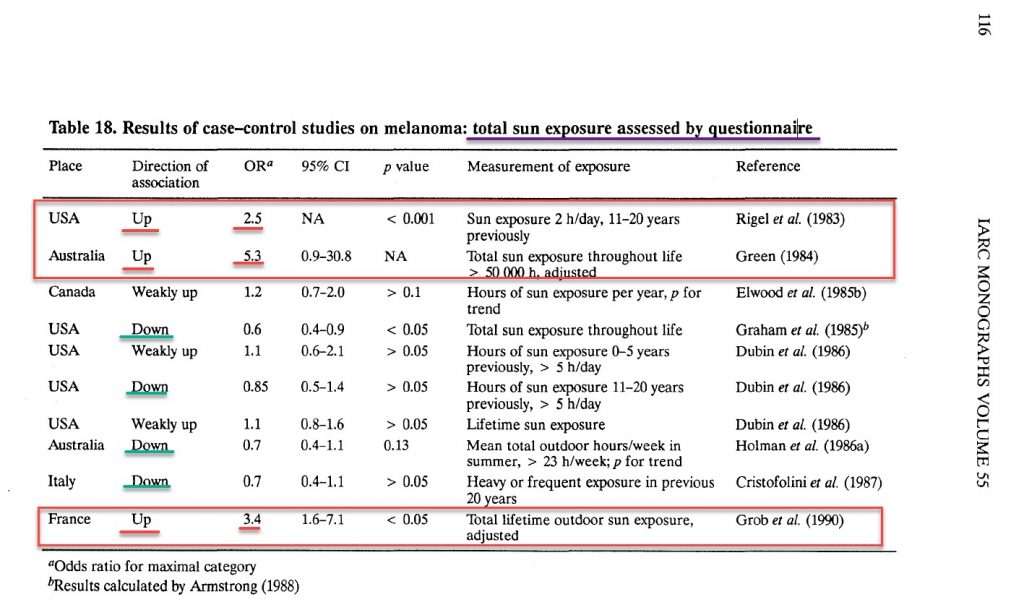
“Regular outdoor occupational exposure is probably the most convenient measure of relatively constant sun exposure and has been assessed with differing degrees of detail, from simple questions on ever/never or a basic amount of outdoor exposure to detailed assessments involving assessments of clothing habits, the geographical location of work and so on. The results appear to be inconsistent (Table 20). The more detailed studies, however, show more consistency, with a significant negative association, particularly in men, who constitute most of the highly exposed subjects (Table 21).”
Also, regarding malignant melanoma (p.220):
“Chronic exposure, as assessed through occupational exposure, appeared to reduce melanoma risk in three of the large studies, particularly in men; this observation is consistent with the descriptive epidemiology of the condition, which shows lower risks in groups that work outdoors.”
With this, sunlight became the only carcinogen on IARC’s list from which the risk of getting cancer decreases the more exposure to it we get!
The final evaluation of exposure to Sunlight in IARC’s MONO 55 seems almost like a typing error or some severe case of cognitive dissonance, with the conclusion about solar radiation created from thin air.
“Solar radiation is carcinogenic to humans (Group 1).
Ultraviolet A radiation is probably carcinogenic to humans (Group 2A).
Ultraviolet B radiation is probably carcinogenic to humans (Group 2A}.
Ultraviolet C radiation is probably carcinogenic to humans (Group 2A}.
Use of sunlamps and sunbeds entails exposures that are probably carcinogenic to humans (Group 2A).
Exposure to fluorescent lighting is not classifiable as to its carcinogenicity to humans (Group 3).”
This classification by IARC of sunlight being a carcinogen in the most dangerous group, led to a barrage of PR activities aimed at keeping humans away from the healing rays or fully covered by sun-protection cosmetics 24/7/365.
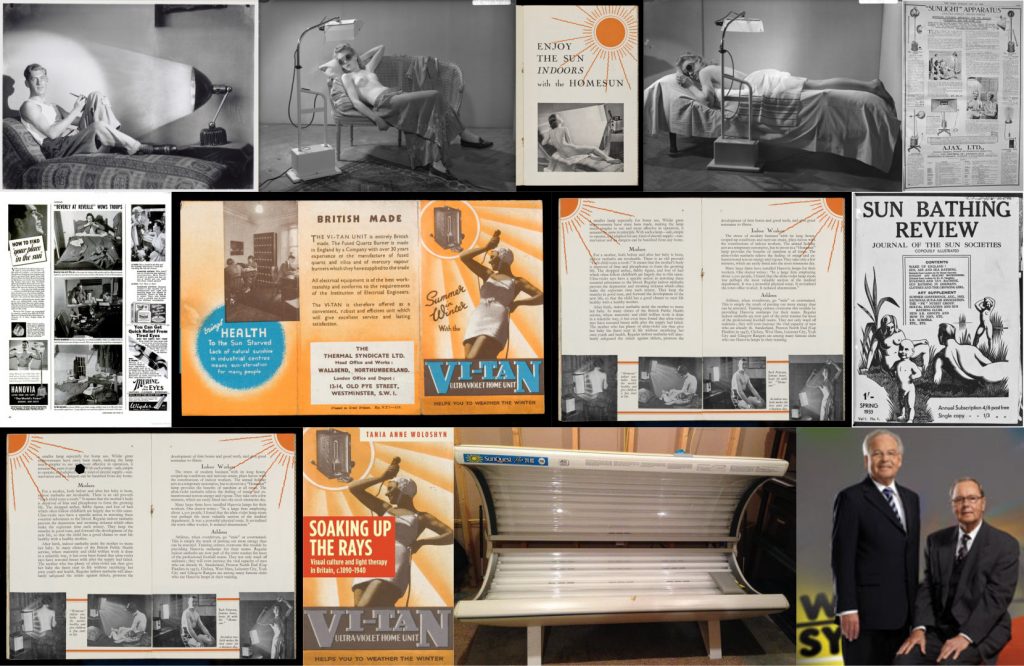
Since MONO55 didn’t condemn sunlamps and sunbeds, it was, however, only a partial victory for the commercial crusaders against sunlight. Continuous lobbying and a mountain of “research” were needed to prove also the “carcinogenicity of the use of UV-emitting tanning devices”.
IARC’s Monograph 100D corrected this in 2012 when “the dark forces”, through a sub-group to IARC, led by Adelé Green, had collected enough tailor-made “research” that “ the use of UV-emitting tanning devices is carcinogenic to humans (Group 1).”
With those two verdicts from a sub-group of WHO, the highest authority for human health, the door was effectively closed for any kind of attempts to use the traditionally honoured rays of sunlight for prophylactic and healing purposes.
The classification of sunlamps as carcinogens also meant a brutal stop for any kind of research on the benefits of full-spectrum lighting.
The Holy Grail of being able to eradicate the influence from latitude and time on human health, so successfully utilised for the growth and health of plants and animals, thus being denied for humans.
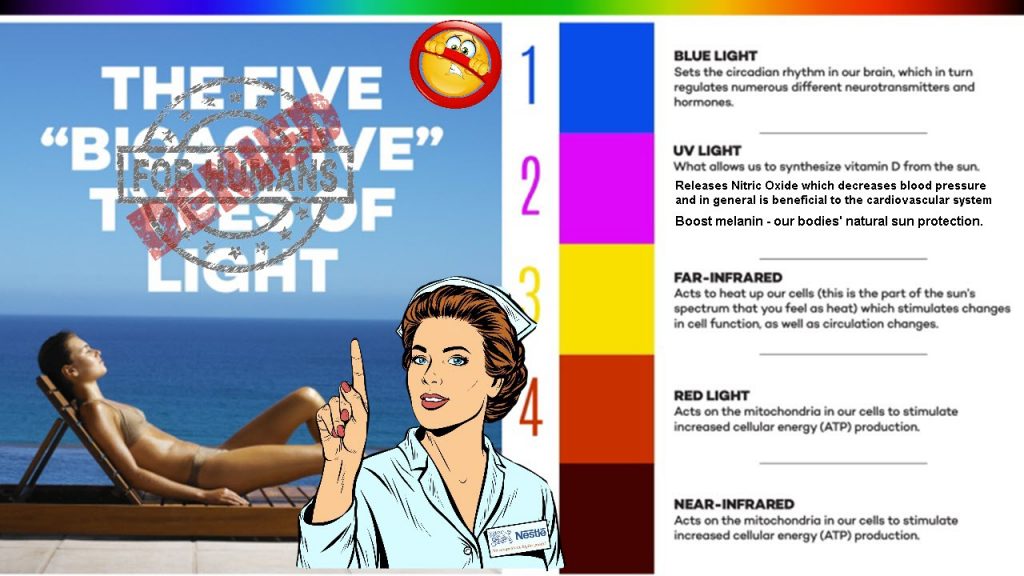
While “medical science” was busy virtually switching off the sunlight by filling us with Fear, Galderma, the other joint venture between L’Oréal and Nestlé created at the same time as L’Oréal Recherché, was busy commercialising on filling the void of sunlight for treatments of skin diseases.
For this, they were utilising the Greed, mainly among dermatologists since Galderma’s products focused on protection against sunlight and on treating skin-diseases with industrial chemicals.
They were “sold” to dermatologists and health authorities by a combination of tailored research, sponsoring of dermatologists’ branch-organisations, advertisements in branch-magazines, med-school curriculum and grants, plus direct and indirect lobbying of health officials and politicians.
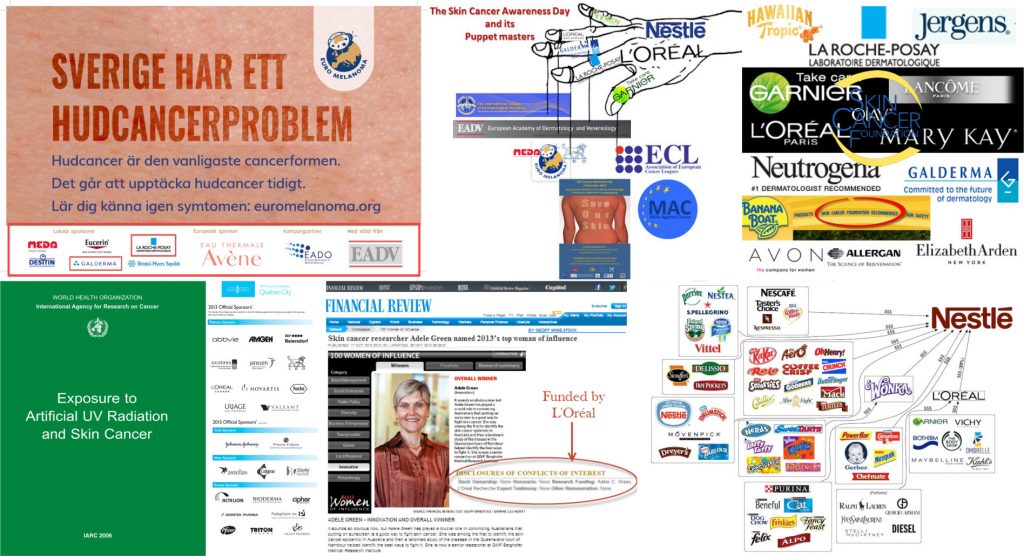
Surfing on the wave of Fear on a board of Greed, both created from thin air, Galderma went from zero in 1981 to 1.6 billion Euro in revenue in 2012 (when Nestlé bought out L’Oréal and renamed it Nestlé Skin-Health) and to 2.7 billion USD in 2017.
L’Oréal’s revenue from chemical sun-protection consumer products is a big part of the total global revenue of 10 billion USD, shared with other beneficiaries of the Fear campaign, as Johnson & Johnson, Proctor & Gamble, Revlon, Unilever, Shiseido, Estee Lauder, Beiersdorf, Avon Products, Clarins Group, etc.
It is difficult to believe that the owners’ greed for corporate profit can have such extreme negative consequences for public health. (8 million premature deaths every year according to Swedish research).
Still, it happened without anyone in high enough position reacting and demanding an investigation into this fraud committed mainly with the decision in IARC’s Monograph 55 to declare sunlight as a carcinogen.
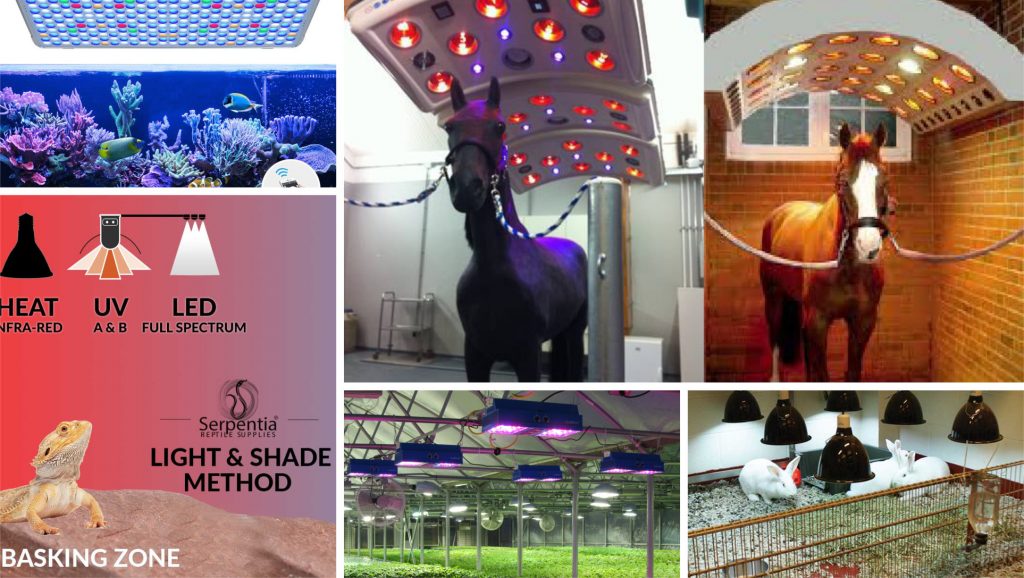
Maybe it will happen someday, but until then, humans will continue to be deprived of the eternal method of healing and growth by sunlight. Still, snakes, fish, and vegetables can enjoy the benefits of full-spectrum light independent of time of the year and distance from the equator.
P.S. If you believe that I am exaggerating the role of Nestlé in the campaign for crushing sunshine as a competitor, please note that they have already used this product strategy before. First, with their attempt to substitute natural breastfeeding with their chemical mixtures (which led to hundreds of thousand deaths in Africa due to polluted water and the campaign “Boycott Nestlé”). And also with their plan to control public water-supply (“The one opinion, which I think is extreme, is represented by the NGOs, who bang on about declaring water a public right. That means that as a human being, you should have a right to water. That’s an extreme solution.” Peter Brabeck-Letmathe, CEO Nestlé in 2005).
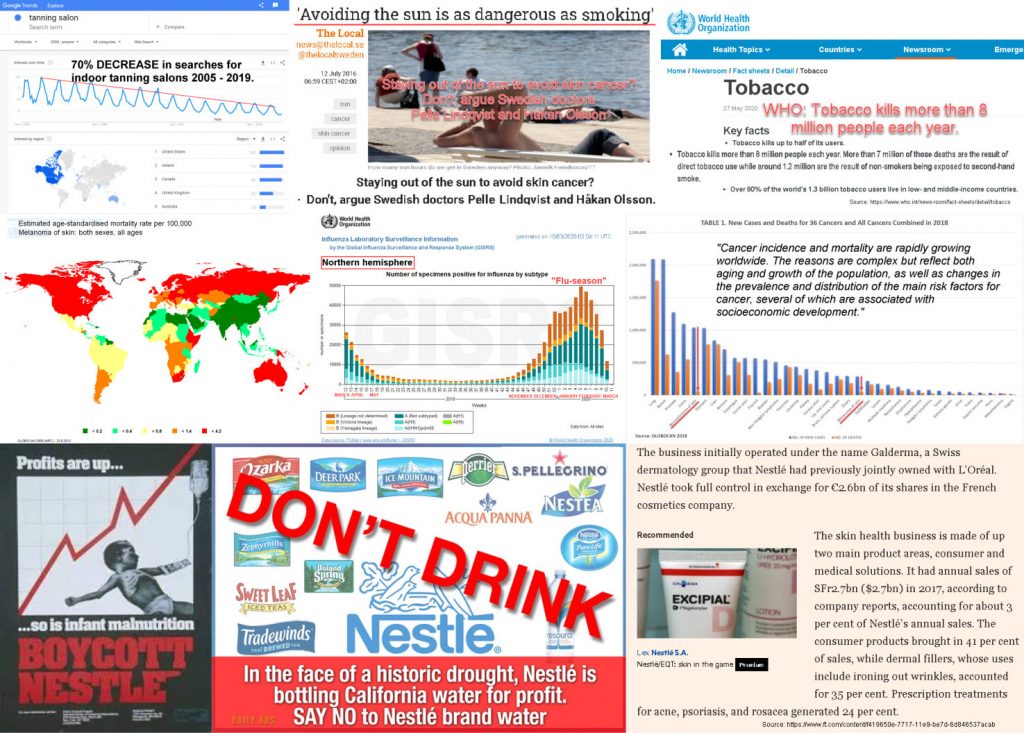
P.P.S. Nestlé, under its new CEO, Mark Schneider, decided in October 2019 to sell Nestlé Skin-Health (former Galderma) to a consortium led by Swedish private equity group EQT (with Investor, owned by the Wallenberg family, as one of its principal founders). The price was 10.2 billion Swiss Francs (approximately the same in USD).
The question is if the due diligence made by EQT and their partners found that the company they bought was built upon the fraud of sunlight classified as a carcinogen? And that this way to crush a competitor has led to a premature mortality rate equal to smoking? That’s 8 million people, more than one Holocaust, EVERY YEAR! But, when water is not considered to be a human right by those in charge, why should access to sunlight, full-spectrum light, and sunbeds be?